Maintenance Decision Tree: Is This a Landlord Issue?
Not sure whether to contact your landlord? This guide helps you work out what kind of issue you have and what to do next. This is a common source of confusion for tenants and landlords alike.
🎥 Video explainer available
Prefer a walkthrough? This short video explains the maintenance decision tree step by step.
Once you've reported an issue, what happens next? This video explains the process.
Wondering why some repairs take longer than expected? This video explains common reasons for delays.
Twinly helps landlords and tenants share clear maintenance guidance in one place.
Maintenance Decision Tree (Visual Guide)
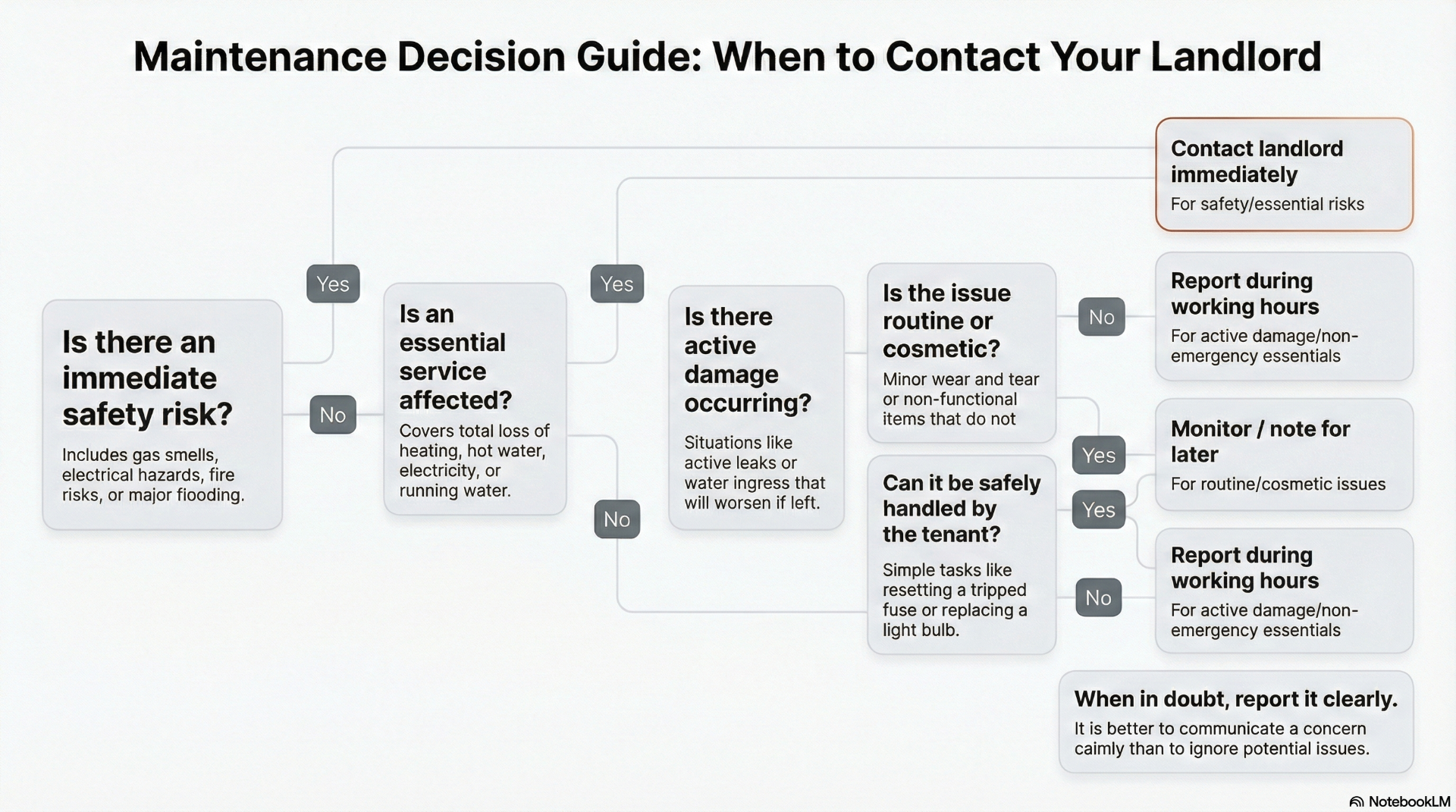
Use this guide to decide when to report issues urgently, during working hours, or simply monitor them.
Download printable PDFLet's work out what to do
Answer a few simple questions to understand whether this issue needs landlord involvement and how urgently.
Why not all issues require escalation
Many issues that feel urgent in the moment are actually informational or minor. This does not mean they are unimportant — it means they can often be resolved more quickly without landlord involvement.
Unfamiliar appliances, forgotten settings, and tripped switches account for a significant proportion of maintenance messages. Checking these first saves time for everyone.
Genuine faults and safety issues should always be reported. The goal is not to discourage reporting — it is to help you understand what kind of issue you have and respond appropriately.
Why landlords need clear information
When you do need to report an issue, the quality of your report directly affects how quickly it can be resolved.
A message that includes what is happening, where, when it started, and what you have already tried gives your landlord (or their contractor) everything they need to act. Vague reports often require follow-up questions, which delays resolution.
Photos and videos are particularly helpful — they show the actual condition and help contractors prepare before visiting.
How clarity reduces stress for everyone
Uncertainty is stressful. Not knowing whether to call, when to call, or what to say creates anxiety for tenants and frustration for landlords.
When tenants have a clear framework for assessing issues, they feel more confident. When landlords receive clear, well-categorised reports, they can prioritise effectively and respond faster.
Good communication is not about fewer messages — it is about the right messages at the right time with the right information.
Learn more
This decision tree is a companion to our full guide on maintenance communication. For deeper understanding, see:
Note: Rental rules, responsibilities, and standards can vary by country, property type, and tenancy arrangement. This guide is provided for general information only.
Next steps
Related Resources
See how this works in practice
Explore a live sample hub, grab the 15-minute setup checklist, or create your own free tenant hub.
Ready to set up your own hub? Get started free